How 1 Samuel 16 and Matthew 5 Reveal the Logocentric Christian Path
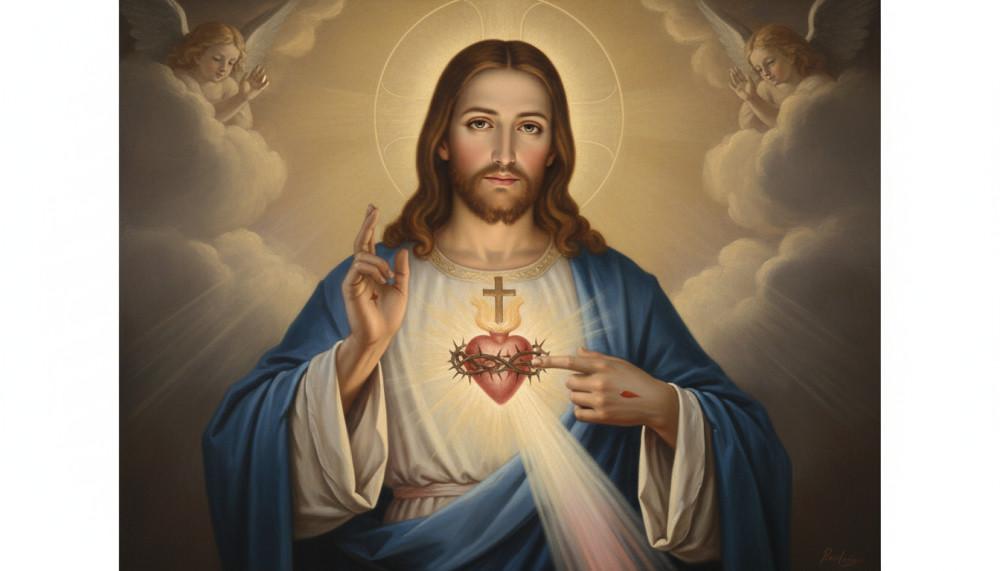 My treatise The Logocentric Christian presents a philosophical operating system grounded in Reason, Character, and Sovereignty. While it may appear as a modern synthesis, this commentary will demonstrate that it is, in fact, the profound unveiling of a rational truth long encoded within the Hebrew-Christian mythos. By constructing a theological bridge with two pivotal scriptural passages, we can see how the Bible itself lays the foundation for a Logocentric understanding. These verses may not be mere proof-texts; they could actually be the ancient pillars that support the entire philosophical edifice of the treatise, revealing that Logocentrism is the operational reality the scriptures may have been pointing to all along.
The treatise’s central argument begins with a diagnosis of the human condition: the default identification with the survival-ego, a consciousness that builds its identity from the outside-in and judges value based on external, material metrics. This is the root of the “transactional order” that esteems power, appearance, and social standing above all else. The Old Testament provides the archetypal example of this error, even in a righteous man like the prophet Samuel, as he seeks to anoint a king based on the world’s default programming of physical presence and impressive stature.
The divine instruction to Samuel transcends mere metaphor; it is a direct, revelatory pronouncement on the essence of sovereignty, delivered at the very moment of anointing a king. This is the Bible’s foundational thesis for the archetypal sovereign: the true qualification is not found in the external metrics of a man’s stature (mar’eh), but is discovered within the internal constitution of his being (lēḇāḇ). With divine authority, it establishes that legitimacy flows from a non-contradictory character, not from the appearance of power. This principle, demonstrated in the literal selection of a king, becomes the bedrock for the treatise’s entire philosophy of the sovereign individual. This foundational principle is articulated with divine finality in 1 Samuel 16:7:
But the LORD said to Samuel, “Do not look at his appearance or at his physical stature, because I have refused him. For the LORD does not see as man sees; for man looks at the outward appearance, but the LORD looks at the heart. ~1 Samuel 16:7 (NKJV)
This verse is the scriptural repudiation of the survival-ego’s entire valuation system. The Lord, as the ultimate expression of the Logos, dismisses the external (mar’eh, appearance) and focuses exclusively on the internal. The Hebrew word used here for “heart,” לֵבָב (lēḇāḇ), is of monumental importance. Far from representing mere emotion, lēḇāḇ signifies the comprehensive core of the inner person: the seat of thought, the center of volition and decision-making, and the very foundation of one’s moral character. It is the biblical term for the integrated self.
This understanding of lēḇāḇ provides a perfect theological validation of Section II of the treatise, “The Law of Identity: The Internal Locus of Being.” When God “looks at the heart,” He is performing a metaphysical assessment of a person’s entire internal operating system. He is examining the integrity of their core premises, the consistency of their will, and the coherence of their chosen identity. This divine standard is not arbitrary; it is the application of the Law of Non-Contradiction to the human soul. A righteous lēḇāḇ is one where “A is A,” where the inner being is whole and not at war with itself. This affirms the treatise’s hierarchy, establishing that the primary reality is the moral/philosophical self, not the physical vessel.
If 1 Samuel diagnoses the problem and establishes the proper standard for being, the New Testament articulates the ultimate consequence of living by that standard. The treatise posits that the heroic work of forging a non-contradictory character—of achieving what it calls “earned innocence”—results in a superior cognitive and perceptual alignment with reality itself. This causal relationship is not a new philosophical invention; it is the central promise of Christ’s beatitudes, delivered with the precision of a metaphysical law.
The Logos-made-flesh (John 1:14), Jesus, states this principle with profound simplicity. The reward for the arduous internal work of self-creation is not an external prize from a transactional deity, but an enhanced state of being and perception that flows directly from that internal work. This is declared in Matthew 5:8:
Blessed are the pure in heart, For they shall see God. ~Matthew 5:8 (NKJV)
This is not a mystical platitude but a statement of pure causality. It promises that a specific internal state (purity of heart) directly and necessarily produces a specific cognitive capacity (to see God). To understand its depth, we must examine the Greek word for “heart,” which carries the philosophical weight of its Hebrew predecessor.
The word translated as “heart” in this verse is καρδία (kardia). Like lēḇāḇ, kardia must be rescued from its modern, sentimentalized meaning. In the Greek context, it is the control center of the self, the seat of intellect, reason, will, and moral identity. The call is not for pure emotion, but for a pure kardia—a purified and integrated core of being. An impure kardia is the fragmented, contradictory state of the survival-ego. A pure kardia is the state of a fully realized sovereign ego, where all internal faculties are harmonized under the authority of the Logos.
The treatise provides the philosophical language to decode this verse in its entirety. The Greek katharos (”pure”) means unmixed or unadulterated—the perfect description of a non-contradictory identity, which the treatise calls “earned innocence.” This is the end product of the treatise’s path: the relentless psychological hygiene, the mini-crucifixions of flawed premises, and the integration of the self into a coherent whole. A pure kardia is the state of this forged, unbreachable integrity.
The second half of the verse is unlocked with the same philosophical precision. The Greek horaó (”see”) means “to discern clearly,” which is the intellectual standard of “clarity” that the treatise champions as a cardinal virtue. Therefore, Matthew 5:8 is the Bible’s own articulation that an internally consistent, sovereign ego (a pure kardia) is the necessary prerequisite to clearly perceive the Logos, the rational order of existence (”see God”). Clarity of perception is a direct function of the integrity of one’s character.
Together, these two verses form a complete metaphysical arc that mirrors the treatise’s own logical progression. 1 Samuel 16:7 establishes the standard of the Logos: value is internal, rooted in the non-contradictory character. Matthew 5:8 describes the consequence of meeting that standard: the earned capacity for clear, rational perception. One verse defines what a sovereign being is; the other defines what a sovereign being does with their perfected faculty of reason.
This scriptural arc provides the theological mandate for the treatise’s central moral task: the heroic transmutation of the ego. The journey is from the survival-ego of Samuel, which sees only the external, to the sovereign ego of the “pure in heart,” which grounds its identity internally. The Bible is not commanding the ego’s destruction, but its purification—its transformation from a reactive, body-identified construct into a proactive, Logocentric faculty capable of perceiving Truth.
The path from the state of error in 1 Samuel to the state of clarity in Matthew is the very process of “at-one-ment” detailed in the treatise. It is the work of subjecting the flawed premises of the survival-ego (the impulse to judge by appearance) to the unyielding light of reason. This internal tribunal purifies the kardia, corrects the identity-level error, and results in the perceptual clarity that is the essence of seeing God.
This Logocentric reading transforms the Bible from a book of external commands into a profound psychological and philosophical manual for self-creation. The scriptures are not primarily concerned with dictating what a person should do, but with guiding them on what they must become. The narrative arc of redemption is not about appeasing a transactional deity, but about the individual’s heroic journey of forging an incorruptible identity worthy of the Imago Dei—the faculty of reason.
In the final analysis, this commentary on The Logocentric Christian reveals the treatise to be the philosophical key that unlocks the Bible’s deepest rational framework. 1 Samuel 16:7 and Matthew 5:8 are the bookends of the Logocentric path, scripturally encoded. The first verse rejects the false metrics of the survival-ego and establishes the true, internal standard of a sovereign identity. The second verse reveals the ultimate reward: the earned innocence of a non-contradictory soul achieving the crystal clarity of a mind that can finally discern the Logos. The Bible has not been superseded by the treatise; it has been waiting for it.
Did you enjoy the article? Show your appreciation and buy me a coffee:
Bitcoin: bc1qmevs7evjxx2f3asapytt8jv8vt0et5q0tkct32
Doge: DBLkU7R4fd9VsMKimi7X8EtMnDJPUdnWrZ
XRP: r4pwVyTu2UwpcM7ZXavt98AgFXRLre52aj
MATIC: 0xEf62e7C4Eaf72504de70f28CDf43D1b382c8263F
THE UNITY PROCESS: I’ve created an integrative methodology called the Unity Process, which combines the philosophy of Natural Law, the Trivium Method, Socratic Questioning, Jungian shadow work, and Meridian Tapping—into an easy to use system that allows people to process their emotional upsets, work through trauma, correct poor thinking, discover meaning, set healthy boundaries, refine their viewpoints, and to achieve a positive focus. Read my philosophical treatise, “The Logocentric Christian”, to learn more about how Greek philosophy, the law of identity, the law of non-contradiction, the law of reason, and Jesus of Nazareth all connect together.
