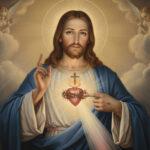
Moving Beyond Defensiveness

Why the most rational response to a false accusation is absolute silence. To live within the Logos is to align the individual mind with the objective, orderly nature of reality. In this framework, truth is not determined by social consensus or the whims of authority, but by a rigid adherence to what is actual. When a baseline of reality is established, deviations from it require substantive, verifiable proof. Therefore, when […] Read more »
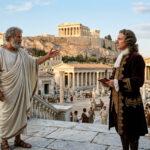

Mastering the Why: The Internal Path to Genuine Freedom

Beneath the illusion of choice lies the truth of causality—find your why or be lived by it. John Locke’s age of reason refers to the developmental stage when an individual gains the capacity for rational thought and self-governance, marking their emancipation from parental authority, as outlined in his Two Treatises of Government. This milestone, typically emerging in adolescence around the mid-to-late teens, enables individuals to make independent, reasoned decisions, distinguishing human adulthood from […] Read more »

John Locke’s Legacy of Liberty: Shattering the Divine Right Fallacy

From Edenic Authority to Prussian Classrooms, the Battle for Rational Freedom. The publication of John Locke’s “Two Treatises of Government” stands as a definitive philosophical dismantling of political tyranny. Written against a backdrop of absolute monarchy, Locke’s work sought to eradicate the justifications used by potentates to subjugate the individual. The primary target of his intellectual assault was the “divine right of kings,” a doctrine that sought to legitimize absolute […] Read more »

The Socratic Guide: From “I Can’t” to the Divine Marriage of Truth

Author’s Note: To properly diagnose the spiritual and cognitive stagnation of the modern era, this article relies heavily on fractal, multilogical thinking to synthesize intersecting truths across the liberal arts, philosophy, natural law, psychology, Parenting with Love and Logic, Integral Theory, and Logocentric Christianity. By layering these diverse but perfectly coherent disciplines, we can paint a precise picture of how navigating everyday problem-solving determines whether an individual matures into alignment with the objective reality of […] Read more »

The Capitulation of the Innocent: Presumption of Guilt in the Age of External Ethos

Does the Conduct of the Guilty Dictate our Rights? The essence of the “weapon of choice” argument is that, because criminals and madmen use these guns to commit crimes, the law- abiding must give them up. But to ban guns because criminals use them is to tell the innocent and law-abiding that their rights and liberties depend not on their own conduct, but on the conduct of the guilty and […] Read more »

The Justice Threshold: Epstein Scandal as Humanity’s Point of No Return

The seed is planted—now we watch humanity choose its timeline. The last several years have served as a prelude, a global dress rehearsal for a moment of decision that is far more definitive than any public health mandate. If the “pandemic” was the initial test of our cognitive liberty and our willingness to submit to the “official lie,” then the unveiling of the Jeffrey Epstein scandal and the release of […] Read more »

Thinking in Fractals: How the Principle of Correspondence Can Unlock Your Thinking

How ancient Hermeticism provides the operating system for modern critical thinking. Hermetic Principle of Correspondence: As above, so below, as within, so without, as the microcosm, so the macrocosm, as consciousness, so technology. Data mapping is the process of creating connections between separate data elements from two distinct data models or database schemas. This essential “translation” ensures that data from a source system can be accurately understood, processed, and utilized by a […] Read more »

We Are All One—But Through What?

Discovering the real foundation that unites humanity without erasing distinctions. The modern spiritual marketplace is saturated with gurus and new age philosophers proclaiming that “we are all one,” yet they rarely offer a mechanism for this unity beyond vague sentimentality or pantheistic blurriness. This fluffy assertion dissolves under scrutiny because it ignores the fundamental architecture of reality. We are indeed connected, but this connection operates through one of two distinct […] Read more »

Worldly Ethos and the Reversal of the Burden of Proof

By seeking judgment from the world, you consent to its jurisdiction. Here’s how to withdraw that consent forever. *Note: It may be helpful to read my previous article first, Logos vs Worldly Ethos, Christ vs Anti-Christ, prior to reading this one, although it is not necessary. As rhetorical devices from Greek philosophy, ethos establishes credibility through authority and character, pathos persuades through emotional resonance, and logos convinces through an appeal to reason and objective truth. While a society […] Read more »

Logos vs the World’s Ethos, Christ vs Anti-Christ

A Logocentric call to arms. The ancient Greeks identified three modes of persuasion: ethos, the appeal to the character or credibility of the speaker; pathos, the appeal to the emotions of the audience; and logos, the appeal to reason and the argument itself. In a sane and ordered civilization, these three exist in a hierarchy with logos at the summit. Reason, which is the reflection of the divine order, must govern emotion and […] Read more »

The Fire and the Cross: A Logocentric Examination of the Promethean Christ

In the annals of mythology and theology, there exists a resonant archetype: the figure who descends from the transcendent realm to emancipate humanity from the darkness of ignorance, only to suffer agonizing punishment by the ruling powers of the age. While the Greeks looked to Prometheus, the titan who defied Olympus, the Christian looks to Jesus, the Incarnation of the Logos. From a Logocentric perspective—where God is understood as the […] Read more »

Stop Opening Pandora’s Jar: Forging Awareness Through Multilogical Forethought

In my previous examination of Pandora’s Jar, I dismantled the deceptive comfort of hope, exposing it as a passive tether that binds us to the reactive cycle of afterthought. To break free from this paralysis, one must adopt the mantle of Prometheus—the bringer of forethought. However, true forethought is not merely the intellectual exercise of predicting outcomes; it is an act of rigorous, spiritual, and cognitive alignment with reality, or the Logos. […] Read more »

Pandora’s Jar and the Curse of Hope

Forethought, Afterthought, and the Trap of Passive Hope To live in alignment with the Logos—the divine ordering principle of truth—requires a rigorous devotion to cause and effect. It demands that we look at reality not as we wish it to be, but as it objectively is. However, the human mind is frequently divided between two modes of being: the active will of the planner and the passive reaction of the […] Read more »

The Heart of Sovereignty

How 1 Samuel 16 and Matthew 5 Reveal the Logocentric Christian Path My treatise The Logocentric Christian presents a philosophical operating system grounded in Reason, Character, and Sovereignty. While it may appear as a modern synthesis, this commentary will demonstrate that it is, in fact, the profound unveiling of a rational truth long encoded within the Hebrew-Christian mythos. By constructing a theological bridge with two pivotal scriptural passages, we can see how […] Read more »

The Cognitive Hijack: How Emotional Triggers Collapse Our World

In the landscape of human interaction, few events are as potent and disorienting as the activation of an emotional trigger. It is a sudden, internal storm that can capsize the vessel of reason, leaving us adrift in a sea of primal reaction. When triggered, our capacity for nuanced thought and responsible behavior is often the first casualty. This cognitive hijacking is not merely a matter of heightened feelings; it is […] Read more »