Refusal can liberate or enslave—learn the difference between standing firm and fleeing truth.
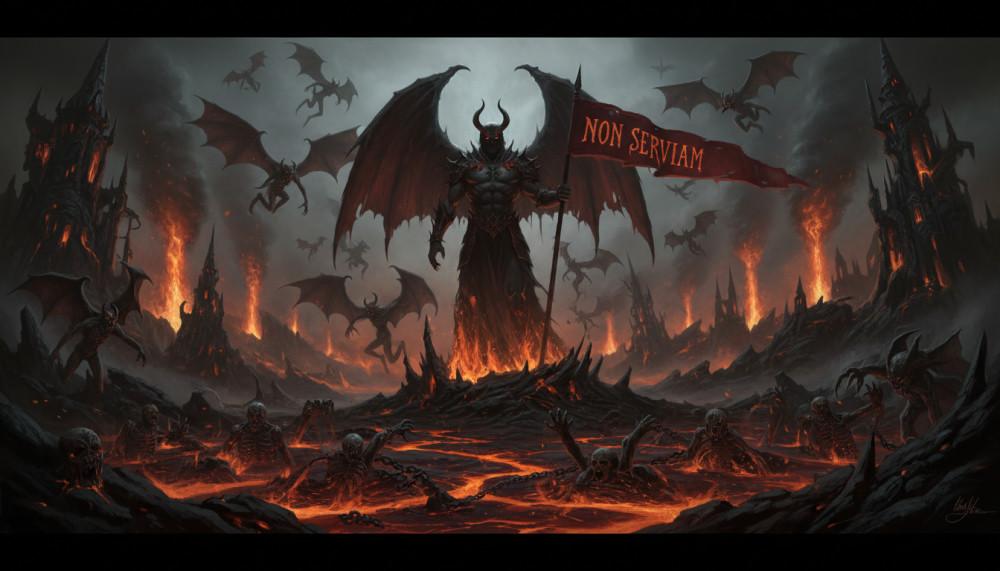
In the architecture of human interaction, the most potent force is not the agreement, but the refusal. While we often focus on the terms of a deal—the negotiation of contracts, the drafting of treaties, or the unspoken social pacts of our relationships—the true seat of power lies in the capacity to say “no.” This refusal is not merely a negotiation tactic; it is a fundamental act of definition. It can occur before a conversation begins, acting as a rejection of a premise; it can occur during the exchange as a rejection of terms; or it can occur after the fact as a refusal to perform. In every instance, the refusal is the mechanism by which an individual enforces their reality, declaring that they are a sovereign actor with boundaries that cannot be crossed.
However, a profound divergence exists in the motivation behind this power, creating a fork in the road between two distinct worldviews of human experience. On one side stands the sovereign refusal, rooted in Logos—reason, objective truth, and natural law. This is the refusal of the free individual who says, “I cannot agree to this because it contradicts the truth.” On the other side lies the inverted refusal, rooted in a fragile survival-ego that masquerades as authority. This is not a refusal of bad terms, but a refusal of reality itself. It is the defensive posture of the narcissistic character trait inherent in most people that says, “I refuse to consider your evidence because it threatens my self-image.”
A rational process is a moral process. You may make an error at any step of it, with nothing to protect you but your own severity, or you may try to cheat, to fake the evidence and evade the effort of the quest – but if devotion to the truth is the hallmark of morality, then there is no greater, nobler, more heroic form of devotion than the act of a man who assumes the responsibility of thinking. ~Ayn Rand
The sovereign refusal is an act of cognitive labor and moral courage. It requires the individual to assess reality, weigh evidence, and make a judgment independent of social pressure. It is a boundary erected to protect the sanctity of the mind against the encroachments of a coercive world. Conversely, the inverted refusal is an act of cognitive sloth and moral cowardice. It is a refusal to think, driven by a desperate need to avoid accountability. The practitioner of this refusal does not seek truth; they seek the preservation of a delusion in which they are infallible, effectively using their will to block out any information that suggests they might be wrong.
This specific posture of the spirit finds its archetypal expression in the Latin phrase attributed to the Devil: Non serviam—“I will not serve.” While traditionally viewed as a rebellion against God, in the context of Logos, it reveals a deeper, more structural refusal. It is not merely a rejection of servitude, but a rejection of the order of reality itself. To say “I will not serve” to Logos is to assert that one’s internal narrative supersedes objective truth. It is the primal assertion of the fragile survival-ego determining that it is better to reign in a hell of one’s own delusion than to serve in the heaven of objective reality. This is the ultimate abdication of moral responsibility: the refusal to submit one’s will to the authority of what is.
Oftentimes, can’t is only can’t when someone won’t. Read that again. ~Nathan Martin
This dynamic is most clearly visible in personal relationships, where the inverted refusal functions as a weapon of emotional control. Consider the individual who, when confronted with their own jealousy or insecurity, abruptly ends a connection claiming they “can’t” handle it. This is a deception of the will—a “won’t” disguised as a “can’t.” By refusing to engage in the discussion, they are seizing power to avoid the humiliation of self-reflection, because they lack the moral courage to work through their own negative feelings. To admit that their jealousy is a choice would be to submit to the Logos of the situation—to acknowledge a lack or an error. By burning the bridge, they preserve their internal narrative of perfection or victimhood at the cost of the relationship, choosing the isolation of the survival-ego over the vulnerability of the truth.
This pathology scales seamlessly to those of high status, where the refusal to be wrong becomes a structural necessity for maintaining unearned authority. For the ethos-driven leader or public figure, being “right” is not a derived outcome of logic, but an assumed property of their rank. When truth penetrates their defenses, it triggers a narcissistic injury, prompting a refusal that is absolute and irrational. They do not argue the facts; they assert their status. This refusal to accept correction is an attempt to enforce a hierarchy where their fragile will supersedes objective reality, revealing that their “power” is merely the tyranny of a mind that cannot survive the light of scrutiny.
It is this individual fragility that ultimately births the collective ideology of the mob. The inverted refusal is the seed of collectivism because the herd offers a sanctuary for the fragile survival-ego. If an individual cannot bear the burden of being wrong alone, they seek a group that validates their delusions. The “capitulation of the innocent” begins with the cowardly capitulation of the self to the survival-ego; once the individual refuses the moral responsibility to think for themselves, they must rely on the “ethos” of the group to think for them. Ideological stubbornness is, at its root, a collective defense mechanism for individuals who are terrified of personal accountability to the Logos.
To protect this fragile ecosystem, the concept of “fairness” is corrupted. In a Logocentric world, fairness is the application of universal standards to unique individuals—rewarding merit and correcting error. But for those who choose to identify with the narcissistic character traits inherent in the survival-ego, this type of fairness is dangerous because it exposes their inadequacy. Therefore, they champion a “blanket fairness” that treats everyone the same regardless of outcome. This distorted fairness argues that rational judgment itself is “unfair,” creating a moral shield that allows the incompetent and the unrepentant to hide in the crowd, protected from the consequences of their actions.
This weaponized fairness creates a closed loop where meaningful discussion becomes impossible. You cannot negotiate with someone who has refused the currency of reason. When one party operates with the worldview of life—seeking truth through Logos—and the other operates through the worldview of death—seeking the preservation of the survival-ego—there is no middle ground. The sovereign refusal is an act of creation, carving out space for integrity. The inverted refusal is an act of destruction, sabotaging the possibility of connection to preserve a fantasy of omnipotence or infinite victimhood.
The “test” we are currently undergoing is a trial of character that asks us to choose between these two modes of existence. Are we using our power of refusal to reject lies and uphold the truth, or are we using it to reject the truth to uphold our comfortable lies? The former requires the moral courage and humility to stand alone and to listen, to discuss, to think, and to be corrected; the latter offers the seduction of never having to say “I was wrong.”
To choose the path of Logos is to accept that true power is not the ability to silence dissent, but the ability to integrate reality. We must maintain our right to refuse the coercion of the collective and the tyranny of the fragile survival-ego. We must remain open to the truth, however painful to our self-image, while remaining steadfastly closed to the seductive simplicity of the lie. We must reject the spirit of non serviam and understand that we only truly rule ourselves when we serve the truth. The refusal to think is the death of the soul; the refusal to lie is its resurrection.
Did you enjoy the article? Show your appreciation and buy me a coffee:
Bitcoin: bc1qmevs7evjxx2f3asapytt8jv8vt0et5q0tkct32
Doge: DBLkU7R4fd9VsMKimi7X8EtMnDJPUdnWrZ
XRP: r4pwVyTu2UwpcM7ZXavt98AgFXRLre52aj
POL: 0xEf62e7C4Eaf72504de70f28CDf43D1b382c8263F
THE UNITY PROCESS: I’ve created an integrative methodology called the Unity Process, which combines the philosophy of Natural Law, the Trivium Method, Socratic Questioning, Jungian shadow work, and Meridian Tapping—into an easy to use system that allows people to process their emotional upsets, work through trauma, correct poor thinking, discover meaning, set healthy boundaries, refine their viewpoints, and to achieve a positive focus. Read my philosophical treatise, “The Logocentric Christian”, to learn more about how Greek philosophy, the law of identity, the law of non-contradiction, the law of reason, and Jesus of Nazareth all connect together.
