Negotiating with Reality: The Sovereign Refusal vs. the Survival-Ego’s Stonewall

Refusal can liberate or enslave—learn the difference between standing firm and fleeing truth. In the architecture of human interaction, the most potent force is not the agreement, but the refusal. While we often focus on the terms of a deal—the negotiation of contracts, the drafting of treaties, or the unspoken social pacts of our relationships—the true seat of power lies in the capacity to say “no.” This refusal is not […] Read more »


The Capitulation of the Innocent: Presumption of Guilt in the Age of External Ethos

Does the Conduct of the Guilty Dictate our Rights? The essence of the “weapon of choice” argument is that, because criminals and madmen use these guns to commit crimes, the law- abiding must give them up. But to ban guns because criminals use them is to tell the innocent and law-abiding that their rights and liberties depend not on their own conduct, but on the conduct of the guilty and […] Read more »

The Justice Threshold: Epstein Scandal as Humanity’s Point of No Return

The seed is planted—now we watch humanity choose its timeline. The last several years have served as a prelude, a global dress rehearsal for a moment of decision that is far more definitive than any public health mandate. If the “pandemic” was the initial test of our cognitive liberty and our willingness to submit to the “official lie,” then the unveiling of the Jeffrey Epstein scandal and the release of […] Read more »

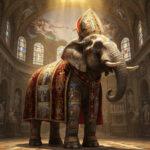
The Elephant in the Sanctuary: Logos Unites What Ethos Divides

Churches as sovereign nations: bound by truth, free in custom. The historical and theological lineage of the western church, particularly the Catholic church, offers a fascinating case study in the relationship between truth and tradition. Theoretically, Rome stands as a unique extension of Athens in the mythology and philosophy of the West, absorbing the Greek understanding of the Logos while holding a direct historical link to the apostles and their […] Read more »

Worldly Ethos and the Reversal of the Burden of Proof

By seeking judgment from the world, you consent to its jurisdiction. Here’s how to withdraw that consent forever. *Note: It may be helpful to read my previous article first, Logos vs Worldly Ethos, Christ vs Anti-Christ, prior to reading this one, although it is not necessary. As rhetorical devices from Greek philosophy, ethos establishes credibility through authority and character, pathos persuades through emotional resonance, and logos convinces through an appeal to reason and objective truth. While a society […] Read more »

Logos vs the World’s Ethos, Christ vs Anti-Christ

A Logocentric call to arms. The ancient Greeks identified three modes of persuasion: ethos, the appeal to the character or credibility of the speaker; pathos, the appeal to the emotions of the audience; and logos, the appeal to reason and the argument itself. In a sane and ordered civilization, these three exist in a hierarchy with logos at the summit. Reason, which is the reflection of the divine order, must govern emotion and […] Read more »

The Architecture of Harmony: Navigating Choice and Hierarchy in Human Connection

In an era defined by limitless potential, we often find ourselves adrift in a sea of options, a state where the sheer volume of possibilities paradoxically hampers our freedom. We are bombarded daily with pathways that, while ostensibly valid, fracture our focus and drain our energy. It is not merely a question of choosing between good and evil; often, the struggle lies in choosing between the good and the harmonious. […] Read more »

The Heart of Sovereignty

How 1 Samuel 16 and Matthew 5 Reveal the Logocentric Christian Path My treatise The Logocentric Christian presents a philosophical operating system grounded in Reason, Character, and Sovereignty. While it may appear as a modern synthesis, this commentary will demonstrate that it is, in fact, the profound unveiling of a rational truth long encoded within the Hebrew-Christian mythos. By constructing a theological bridge with two pivotal scriptural passages, we can see how […] Read more »

The Logocentric Christian: A Philosophical Treatise on Reason, Character, Sovereignty, and Value

Introduction: A Philosophical Inquiry Let it be stated from the outset: what follows is a philosophical treatise, not a theological one. Logocentric Christianity, as it will be detailed, is not a new set of doctrines to be accepted on faith, but a rational framework for understanding reality, morality, and the human condition. It is an operating system for the mind, grounded in the primacy of the Logos—the universal principle of […] Read more »

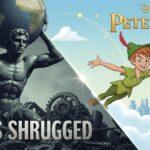
The Sovereign Opt-Out

Atlas Shrugged meets Peter Pan meets a Logocentric Christianity The great departure was not an ending, but a thinning. It was a quiet exodus, unnoticed by those who measured the world in headlines and polls. There was no rupture in the sky, no grand announcement, only a gradual and persistent vanishing of certain individuals. They were the chess players in a world that had embraced Calvinball, the architects in an […] Read more »

The Captain of the Soul: Why a Principled Ego Is the Bedrock of True Individuality

Can individuality, individualism, or individuation exist without the ego? Individualism, from a Randian perspective, is the moral stance that man’s primary moral purpose is the pursuit of his own rational self-interest and happiness through the unfettered use of his reason. It holds that a man must exist for his own sake, neither sacrificing himself to others nor sacrificing others to himself. In the modern search for meaning, the ego has […] Read more »

The Chess Player in a World of Calvinball

Attempting to live freely in a world dominated by those with an unearned ego. There is a profound and often maddening disconnect that a person of substance experiences when navigating the modern world. You can dedicate yourself to building a mind of logic, principle, and intellectual honesty, only to watch as those with fragile, yet grandiose egos—the masters of political flow—achieve practical results with astonishing speed. This isn’t a failure […] Read more »

The Sword in the Stone: Forging the Philosopher-Warrior

The society that separates its scholars from its warriors will have its thinking done by cowards and its fighting by fools. ~Greek historian Thucydides The archetype of the warrior is etched into the bedrock of human history, a symbol of courage and discipline. Yet, within this single image lie two profoundly different figures: the soldier and the philosopher-warrior. The former is a highly effective instrument of power, defined by their […] Read more »

Beyond Doctrine: Judging By Fruits, Not Formulas

But the fruit of the Spirit is love, joy, peace, longsuffering, kindness, goodness, faithfulness, gentleness, self-control. Against such there is no law. ~Galatians 5:22-23 (NKJV) Beware of false prophets, who come to you in sheep’s clothing, but inwardly they are ravenous wolves. You will know them by their fruits. Do men gather grapes from thornbushes or figs from thistles?  Even so, every good tree bears good fruit, but a bad […] Read more »

The Metaphysics of Creating Your Own Reality: Focus, Schrödinger’s Cat, Mystery Boxes, the Rapture, and Timeline Jumping

From a psychological perspective, the idea that “focus creates one’s reality” suggests that an individual’s attention and cognitive prioritization shape their perception and experience of the world by filtering sensory information and amplifying what aligns with their focus. This process, often linked to mechanisms like the brain’s reticular activating system, influences beliefs, emotions, and behaviors, effectively constructing a subjective reality based on where one directs their mental energy. The principle […] Read more »