The Elephant in the Sanctuary: Logos Unites What Ethos Divides

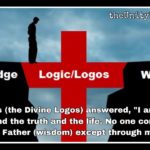
Churches as sovereign nations: bound by truth, free in custom. The historical and theological lineage of the western church, particularly the Catholic church, offers a fascinating case study in the relationship between truth and tradition. Theoretically, Rome stands as a unique extension of Athens in the mythology and philosophy of the West, absorbing the Greek understanding of the Logos while holding a direct historical link to the apostles and their […] Read more »

Worldly Ethos and the Reversal of the Burden of Proof

By seeking judgment from the world, you consent to its jurisdiction. Here’s how to withdraw that consent forever. *Note: It may be helpful to read my previous article first, Logos vs Worldly Ethos, Christ vs Anti-Christ, prior to reading this one, although it is not necessary. As rhetorical devices from Greek philosophy, ethos establishes credibility through authority and character, pathos persuades through emotional resonance, and logos convinces through an appeal to reason and objective truth. While a society […] Read more »

Logos vs the World’s Ethos, Christ vs Anti-Christ

A Logocentric call to arms. The ancient Greeks identified three modes of persuasion: ethos, the appeal to the character or credibility of the speaker; pathos, the appeal to the emotions of the audience; and logos, the appeal to reason and the argument itself. In a sane and ordered civilization, these three exist in a hierarchy with logos at the summit. Reason, which is the reflection of the divine order, must govern emotion and […] Read more »

The Logocentric Christian: A Philosophical Treatise on Reason, Character, Sovereignty, and Value

Introduction: A Philosophical Inquiry Let it be stated from the outset: what follows is a philosophical treatise, not a theological one. Logocentric Christianity, as it will be detailed, is not a new set of doctrines to be accepted on faith, but a rational framework for understanding reality, morality, and the human condition. It is an operating system for the mind, grounded in the primacy of the Logos—the universal principle of […] Read more »

Manufacturing Consent Through Coercion: The Illusion of State Authority

In the complex and often fraught interplay between the individual and the vast machinery of the state, a fundamental conflict frequently emerges, one that opens a chasm between the raw capacity for force and the legitimate right to authority. When a citizen finds themselves in the crosshairs of a bureaucratic entity, the very nature of truth, reason, and justice is called into question, transforming the landscape of civil discourse into […] Read more »

The Core of Individualism: Humility, Empathy, and Courage

Intellectual Humility: Having a consciousness of the limits of one’s knowledge, including a sensitivity to circumstances in which one’s native egocentrism is likely to function self-deceptively; sensitivity to bias, prejudice and limitations of one’s viewpoint. Intellectual humility depends on recognizing that one should not claim more than one actually knows. It does not imply spinelessness or submissiveness. It implies the lack of intellectual pretentiousness, boastfulness, or conceit, combined with insight […] Read more »

The Matrix Trilogy as a Metaphor for the Trivium Method

The Matrix trilogy, comprising “The Matrix” (1999), “The Matrix Reloaded” (2003), and “The Matrix Revolutions” (2003), serves not only as an engaging science fiction narrative but also as a profound metaphor for the process of knowledge acquisition through the Trivium method. The Trivium, one of the foundational components of classical education, consists of three stages: grammar, logic, and rhetoric. These stages correspond directly to the trilogy’s progression from initial revelation […] Read more »

Modesty: the Faux Humility

I often joke around and tell people “I’m the most humble person I’ve met, but I’m not modest”, but I say this to poke at them because I also know that society doesn’t encourage people to develop their inner humility in a quest for unerring truth like I do, nor do most people approach life through the lens of the Socratic paradox of “I know that I know nothing” as […] Read more »

A Philosophical Understanding of What it Means to Invite Jesus into One’s Heart

The Christian experience of conversion, such as inviting Jesus into one’s heart to be “saved,” begins with an act of humility that reflects the recognition of a need for Divine understanding. This initial step, akin to the “grammar” phase of the Trivium where foundational knowledge is acquired, involves a willful acknowledgment of human limitation and a turning toward God’s grace. It aligns with Ephesians 2:8-9, “For it is by grace […] Read more »

Bridging the Gap Between Theology and Philosophy

I used to be a Christian theologian, or at least, somebody who loved studying doctrine and debating it, but I was also somebody who asked a lot of questions, and that led me through and out of Christian theology, and into psychology and philosophy. Along the way, I converted to Judaism and spent many years devoted to learning, understanding, and practicing it, especially since they valued psychology a bit more […] Read more »

Finally! The Penny Drops!

I think he’s missing the point of what she’s actually implying when she stated, “In terms of women-led films and women as superheroes in particular, and excitement around that, I think it’s really just about whether or not the movie’s good. […] Especially now we have more and more films that are female-led that are action-based or superhero- based..” Hollywood has pushed female led movies to the detriment of quality […] Read more »

Has the YouTube Content Creator ‘Star Wars Theory’ Changed?

I love the integrity and principled approach to ‘Star Wars Theory’s’ content. The one thing I think most people miss is that the underlying worldview and philosophy of George Lucas’s Star Wars was inverted 180 degrees by Disney’s Star Wars after their purchase of the intellectual property, as it went from the Logocentric monomyth (Hero’s Journey), aka the search for meaning and purpose, to a deconstructionist and postmodern approach of […] Read more »

Twitter and the Reign of Chaos

Twitter is a great place to “cherry pick” from, as well as to employ the “biased sample” fallacy. See the following video to see how these fallacies are used to manipulate the masses, to justify a malicious course of action, and to claim somebody or some group is a victim, when in reality they are not. “Cherry picking, suppressing evidence, or the fallacy of incomplete evidence is the act of […] Read more »

Intellectual Self-Defense and the Four Circuits of Being

There are four primary circuits of being, and each circuit transcends yet includes previous circuits. physical → emotional → rational → moral A moral person has fully incorporated their rational, emotional, and physical states of being. The emotional transcends and includes the physical, the rational transcends and includes the emotional and physical, and the moral transcends and includes the rational, emotional, and physical states of being. A moral being is […] Read more »

Almost Every Major Franchise is Compromised

“Moreover, it’s important to keep in mind, that for the people pushing all of this politically correct stuff, their ideology comes first. Hollywood and their benefactors have very deep pockets and they can afford to lose money. Money is a secondary concern, wokeness and a left wing political agenda matters more to the people who are pushing it. Social engineering of the populace through mass media is their primary objective, […] Read more »